
 +34 68 911 88 69
 +382 69 704 986

What is an Emirates ID and how do you get one
Emirates ID is mandatory for UAE citizens and residents. Foreigners can get it only after receiving UAE residency.
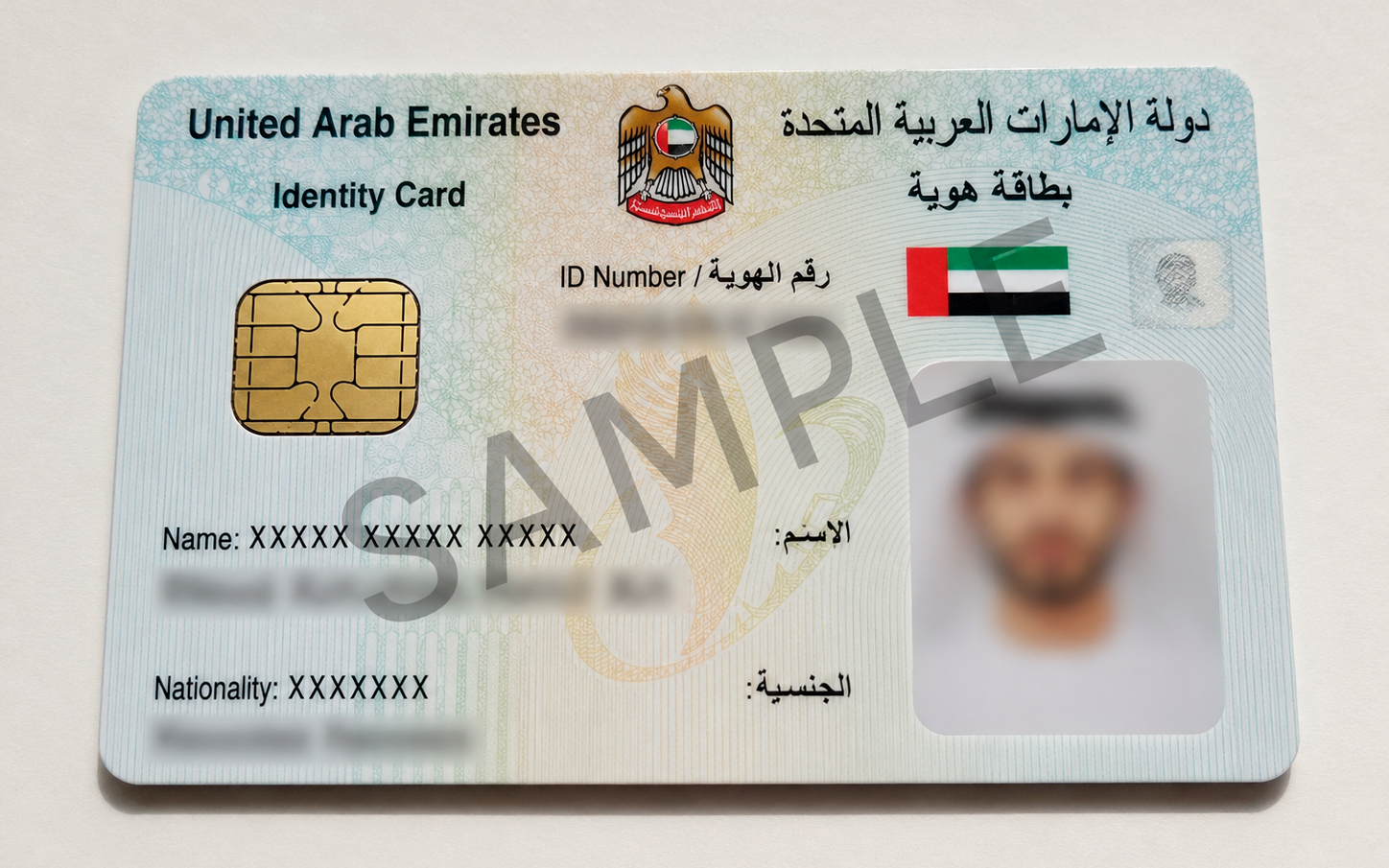
Sample UAE identity card used to verify identity and residency status
What can you use an Emirates ID for
The Emirates ID is much more than just a personal identification document. This identity card provides its holder with a variety of benefits, including:
- access to all government services;
- the ability to open a bank account;
- the right to vote in Federal National Council elections (for citizens);
- buying a local (non-tourist) SIM card;
- long-term rental of an apartment or house via the secure Ejari system;
- buying a vehicle;
- access to healthcare services;
- expedited passport control clearance via the e-Gate system at airports.
Only UAE citizens can use the Emirates ID for visa-free travel within Gulf Cooperation Council (GCC) countries. For travel outside the UAE, including to countries within the Schengen Area, you will need your passport and potentially a visa.
What you need for the Emirates ID: application process and requirements
It is impossible to get an Emirates ID in Dubai or any other emirate without a valid residency permit. In other words, to obtain this document, you will need to relocate to the UAE and secure a residency visa.
According to UAE legislation, there are several options for legal residency available to foreign nationals. The main options are as follows:
- Employment. You must sign an employment contract with a local company. The employer submits the application form for the residency visa. If the application is approved, a residency permit is issued for a period of two years, with the option of renewal.
- Remote work. A digital nomad visa is issued for a period of one year, with the possibility of renewal. To qualify, you must work remotely for a company registered outside the UAE and earn a monthly salary of at least USD 3,500. An increasing number of digital nomads from around the world are choosing the UAE today; it currently ranks second globally in the Digital Nomad Visa Index. Remote workers favour the UAE due to its high level of safety and strong focus on innovation.
- Startup. A Golden Visa is issued to startup founders for a period of five years. To qualify, applicants must develop an innovative project, obtain official government approval and secure support from a local business incubator. Additionally, a minimum investment of USD 136,150 must be made in the project. This option is ideal for those aiming for long-term immigration and conducting business in a strong, stable economy.
- Business. A 5-year residence permit is available to individuals who register a company in the UAE. Unlike the Golden Visa, this option does not require applicants to prove that their enterprise is innovative, secure support from a business incubator or invest a specific sum of capital into the business. The key requirement is obtaining a trade licence to conduct business operations.
- Family ties. This option is suitable for individuals who have relatives residing in the UAE. Eligible family members include spouses, unmarried daughters, sons under 25, and children with special needs, regardless of age. To qualify, the sponsoring relative (the inviter) must earn a monthly salary of at least USD 1,100 (or USD 816 per month plus additional funds to cover living expenses). The residence visa is valid for one, two or three years, depending on the individual case. Relatives of UAE citizens are eligible for a 5-year residence permit.
It is also possible to obtain legal status in the UAE through investment. In this case, a residency visa is issued for either 5 or 10 years, depending on the investment sector:
| Investment category | Minimum investment amount, $ | Visa validity period, years |
|---|---|---|
| Bank deposit in the UAE | 544,600 | 10 |
| New or existing business | 544,600 | 10 |
| Local business contributing annually to the UAE Federal Tax Authority | 68,000 | 10 |
| Real estate | 544,600 | 5 |
 UAE residency by investment
- Residency for family members
- Purchase of high-liquidity real estate
- No language requirement

When choosing a method of establishing legal residency in the UAE, it is important to consider your personal goals, budget, and plans, as well as the specific residency visa requirements and nuances of local legislation. That is why many applicants work with immigration lawyers to choose the right route and avoid mistakes. These specialists can help you identify the most suitable grounds for immigration, assist with documentation, and provide guidance throughout the entire Emirates ID process, right up until you receive your card.
How to apply for your Emirates ID: a step-by-step guide
To get your Emirates ID, you must hold a valid UAE residency permit. Once your residency permit has been issued, you must proceed as follows:
- Prepare your documents. You must provide a photograph that complies with all standards set by the International Civil Aviation Organization (ICAO). It is essential that the photograph was taken no more than six months before your application. Ensure that your passport is valid and gather all other necessary supporting documents.
- Submit your application. Applications can be submitted via the official ICP website. To complete your Emirates ID application, you must first register on the portal and attach scanned copies of all relevant documents. You must then pay the applicable government fees and schedule an appointment to visit an ICP center.
- Submit biometric data. For initial Emirates ID applications, all individuals aged 15 and over must provide their fingerprints. To fulfill this requirement, you must appear in person at an ICP office or an authorized customer service center located within your residential area.
- Wait for your Emirates ID to be produced. Typically, production of the identity card takes 5 days. Expedited initial processing, completed within 24 hours, is available exclusively to citizens of the UAE and other Gulf Cooperation Council (GCC) countries. Foreign nationals may only use the expedited service when applying for a replacement ID card. You can track the status of your application through your personal account on the ICP portal.
- Obtain your Emirates ID. The ID card will be delivered via courier to the address you specified in your application. If you requested an expedited ID, you must collect it in person at the ICP office or customer service center where the request was submitted.
Mirsatori specialists can help you prepare your documents, complete the application process and track each stage until your card is issued.
Required documents for an Emirates ID in the UAE
To obtain an Emirates ID, you will need:
- a valid passport;
- 1 photograph that meets ICAO standards;
- a UAE residency permit;
- a certificate confirming completion of a medical exam.
Processing times and costs
Government fees must be paid to obtain an Emirates ID. Residents are charged USD 27 for each year of residence in the UAE; this amount is the same for both children and adults. Additionally, a USD 27 service fee is payable during the Emirates ID application process.
Card validity and renewal options
The Emirates ID is issued to foreign nationals in Dubai and other emirates for a period corresponding to the validity of their approved residence visa. For instance, if you have a 5-year business residence permit for the UAE, your ID card will be valid for the same duration, making everyday life in the UAE more convenient and accessible.
You may submit an application for renewal to the ICP (Federal Authority for Identity, Citizenship, Customs & Port Security) if your ID card has already expired or if less than 6 months are remaining until its expiration date. The government fees for this procedure are identical to those for an initial application: USD 27 per year, plus a USD 27 service fee.
Failure to renew an Emirates ID promptly (i.e., more than one month after its expiration date) results in a fine of USD 5 per day, up to a maximum total of USD 272.
You must notify the ICP of any changes to your residential address or phone number within one month. You can update your details online via your personal ICP account. A government fee of USD 27 applies to each data amendment.
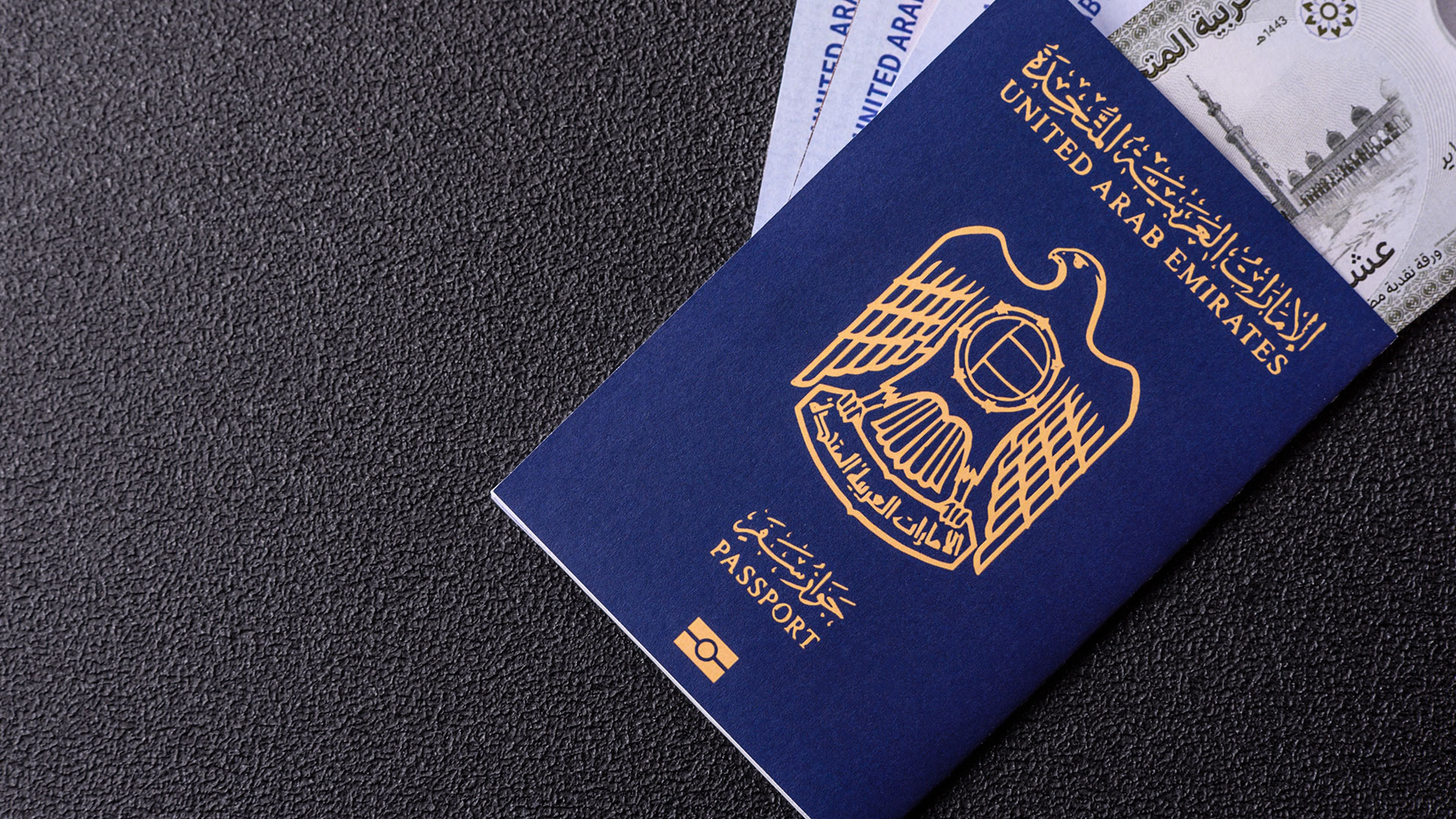
UAE passport and Emirates ID are separate documents: the passport confirms nationality and international travel identity, while the Emirates ID serves as a national identification card for residents and citizens
How to avoid errors when applying for and using an Emirates ID
You are not required to notify the UAE government or your country of citizenship upon receiving an Emirates ID. However, depending on the laws of your home country, you may be required to inform your national authorities that you have obtained a residence permit in the United Arab Emirates.
When applying for certain types of residence visas, it is necessary to obtain a «No Objection Certificate» (NOC), which is a legal document confirming that there are no objections. For example, a NOC is required when a child seeks legal residency based on family ties. In this case, the second parent or legal guardian uses the document to confirm they have no objections to the minor obtaining a visa. However, a NOC is not required for the specific purpose of applying for an Emirates ID card. A NOC may also be required when purchasing real estate or obtaining a business licence, depending on the case.
An Emirates ID is revoked if a resident loses their right to reside in the UAE. This may occur due to the expiration of the residence permit or as a result of violating the law. The sponsor, such as an employer or family member, must submit the cancellation request. Individuals permanently leaving the UAE must submit an application themselves to the ICP or GDRFAD.
To sum up, obtaining UAE resident status is the key step before applying for an Emirates ID. To avoid mistakes, you can consult Mirsatori specialists, who will explain the requirements, prepare your documents in line with current regulations, and guide you through the application process.








News, tips, and exclusive insights — all on our channels. Pick the platform you prefer:


Fill out the form to schedule a meeting in the office or online

 +971 58 94 43 591