
 +34 68 911 88 69
 +382 69 704 986

Which countries offer citizenship by investment in 2026?
Citizenship by investment is a popular tool for expanding personal and business opportunities. In this article, we looked at countries with current investment programs.
Different investment options for obtaining citizenship
Depending on the specific country’s requirements, you can make a non-refundable or refundable contribution to economic development, purchase real estate, invest in a locally established business, and/or create jobs.
Non-refundable contribution. Investors donate money to government funds, usually development or infrastructure projects. While the funds are non-refundable, the process is the fastest and simplest. For instance, citizenship in Vanuatu can be obtained through a contribution of at least USD 130,000.
Real estate purchase. In recent years, this has been the most popular option. You must purchase a residential or commercial property for the amount required by law. You can sell the property after 3-7 years, during which time it can generate rental income. Minimum investment: USD 270,000 in Grenada and USD 400,000 in Turkey.
Investment in business projects. Investment in capital in national enterprises, as well as government-approved economic projects. This option is more complex but potentially more lucrative for obtaining citizenship. It is offered in programs in Turkey, Grenada, and Saint Lucia, where local business development is encouraged.
Bonds and deposits. Several countries, including Malta, Turkey, and Egypt, offer passports in exchange for purchasing government derivatives and/or depositing funds in a designated bank. This method guarantees a return on investment within a specified period (on average, 3 years). It’s a fairly reliable investment method that avoids the risks of fluctuations in the real estate market or business development, while ensuring a return on capital, sometimes with significant interest.
A comparison table of investment options:
| Investment option | Pros | Cons | Example countries |
|---|---|---|---|
| Non-refundable (charitable) contribution | Quick, no need to manage the assets | Non-refundable | St. Kitts and Nevis, Vanuatu, Dominica, Grenada |
| Real estate purchase | Opportunity to preserve and grow capital, investment return | Requires management, risk of price fluctuations, waiting period | Grenada, St. Lucia, Malta, Turkey, Egypt |
| Business investment | Potentially high returns, business expansion | High risks, complex management | Turkey, Jordan, St. Kitts and Nevis, Egypt |
| Bonds purchase/deposits | Simplicity, clear terms, probable return of investment | Requires capital to be “frozen” for a set period | Malta, Turkey, St. Lucia |
| Job creation | Business scaling, potential returns | Risks associated with launching a business project | Turkey, Jordan, Portugal, the USA |
Top 10 countries offering citizenship by investment in 2026
Citizenship by investment is currently available in over 30 countries. Considering the required investment, processing speed, profitability, and reliability, Mirsatori experts identified the 10 countries with the most favorable conditions for 2026.
1. Vanuatu
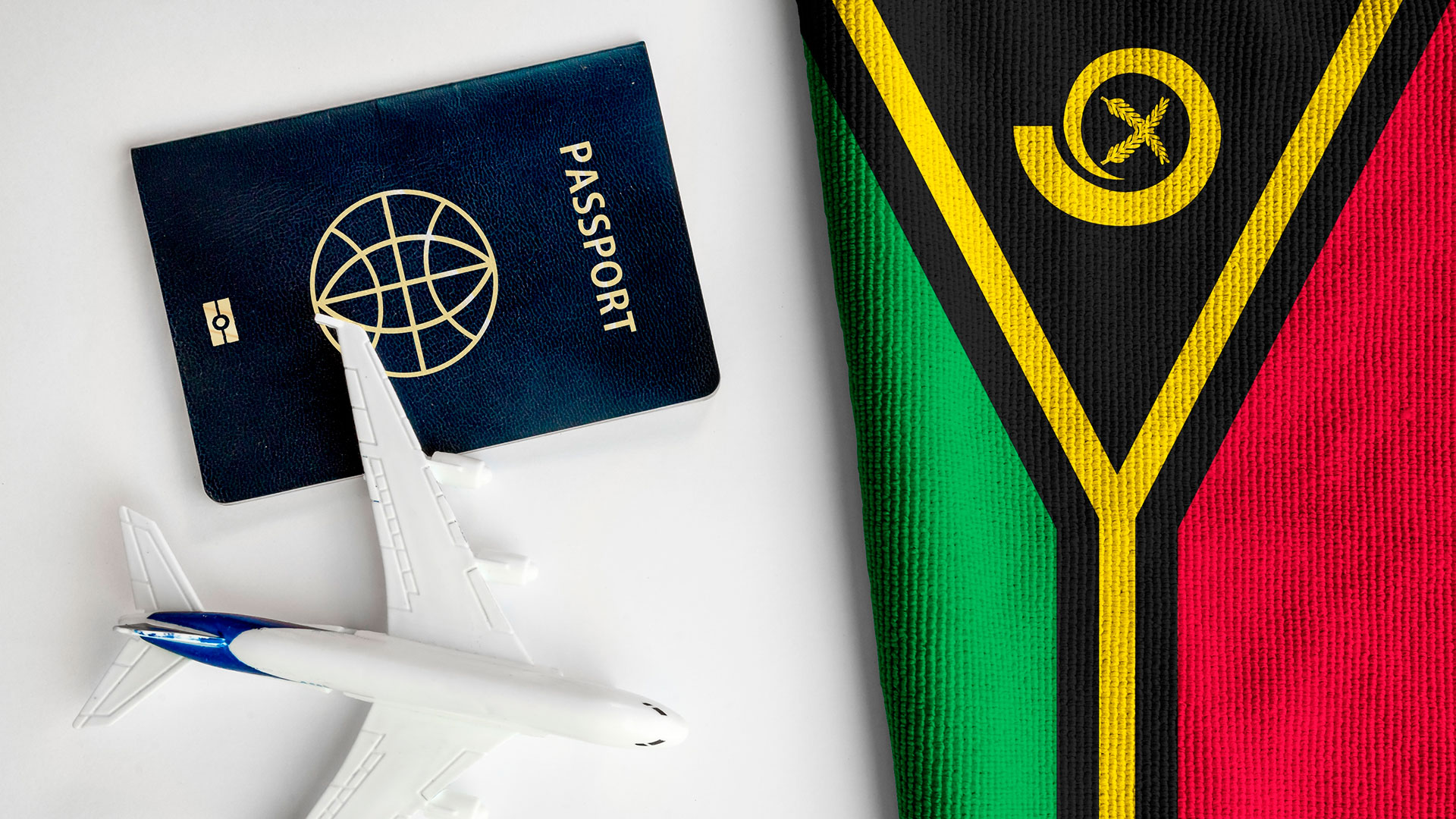
The main advantage of Vanuatu’s program is the speed of passport processing: up to 2 months. Applicants must make a non-refundable investment in the National Development Fund to support government initiatives in areas such as medicine, education, and agriculture. The minimum investment per applicant is USD 130,000. Participation in the program does not require residency in Vanuatu, and the entire process can be completed remotely.
The passport allows visa-free travel to 96 countries, including India and the Maldives. Vanuatu’s tax system provides exemptions from income, capital gains, and inheritance taxes. One disadvantage is that there are fewer visa-free destinations than in Caribbean countries, for example.
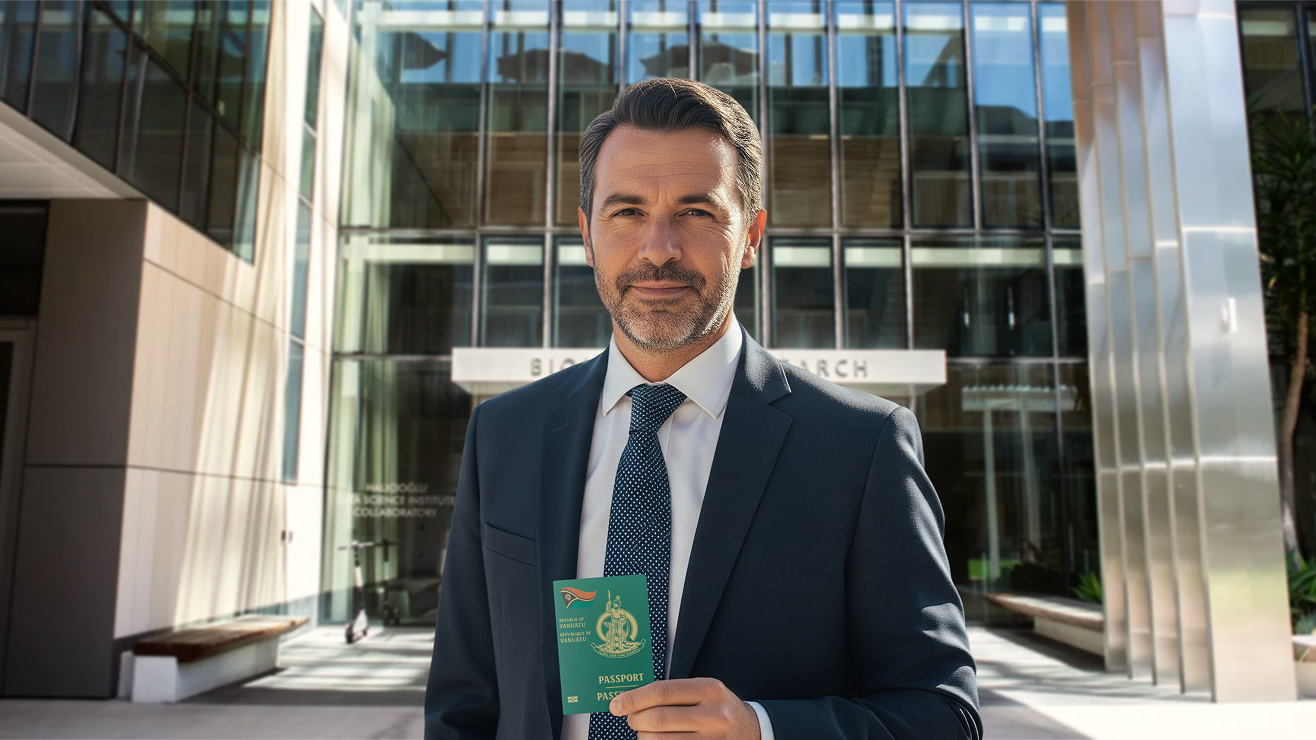 Vanuatu citizenship by investment
- Fast application process
- Citizenship status for family members
- Remote document submission

2. Turkey
Investors seeking Turkish citizenship have many options, including purchasing residential or commercial real estate, opening a bank deposit, acquiring government bonds, shares in real estate funds, venture capital funds, and creating jobs. The minimum property value required to apply is USD 400,000. The deposit amount and value of securities start at USD 500,000. The upside is that, after 3 years, you have the opportunity to sell the property or withdraw the funds for each investment option (except for creating 50 jobs), sometimes with significant interest due to price increases.
Turkey is a formal candidate for EU membership. Therefore, the list of visa-free destinations (which is 125 this year), may expand in the future. Disadvantages include the high cost of participating in the program and a slightly shorter list of visa-free destinations than those available to Caribbean passport holders.
3. Egypt
The Egyptian CBI has been in effect since 2019, and the country’s passport holds significant influence in the Middle East and Africa. The law provides for several investment options:
- An irrevocable contribution of USD 250,000 to the national fund.
- Purchasing real estate worth USD 300,000 or more (with the option to sell after 5 years).
- A business investment of USD 350,000, accompanied by a USD 100,000 contribution and a 5-year retention period.
- A deposit of USD 500,000 in a government-approved bank (interest-free return after 3 years).
Processing the passport typically takes anywhere from six months to a year. While the document provides visa-free access to 64 countries, the main benefits of this status lie elsewhere. Egypt’s strategic location opens the prospect of expanding business activities in the region. Another advantage is that applicants are eligible for a U.S. E-2 visa.
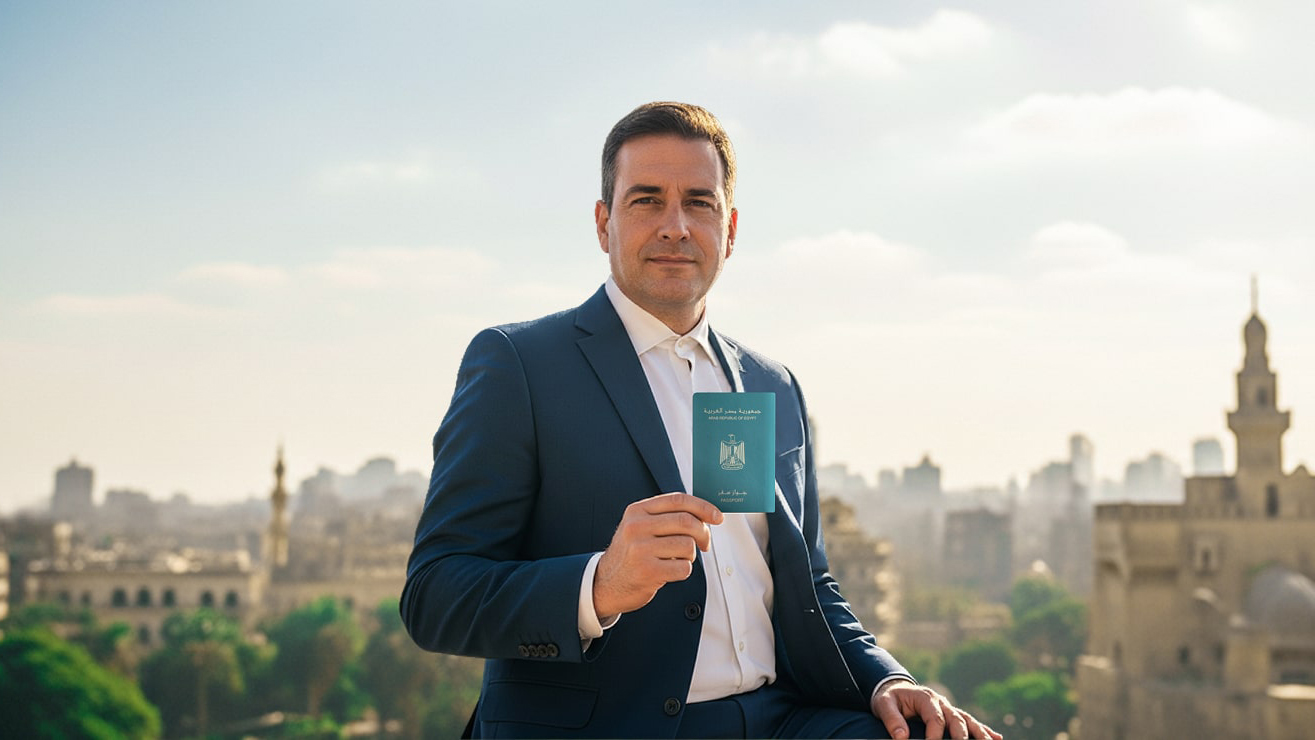 Egypt citizenship by investment
- Fast-track processing
- No language or integration requirements
- Family immigration options
4. St. Kitts and Nevis
The CBI program in St. Kitts and Nevis is one of the world’s first, most stable, and most reliable, and it is still in operation today. The country is known for its strict approach to due diligence, which involves verifying companies’ documentation and financial activities. Investment options include a charitable contribution of USD 250,000, purchasing real estate for USD 325,000 (which is permitted for sale after 7 years), and investing USD 250,000 in social projects (green economy, education, transportation). Applications are processed within 3 to 6 months.
A St. Kitts and Nevis passport offers visa-free access to over 145 countries, including the entire Schengen Area, Hong Kong, the United Kingdom, and Singapore. Despite the EU’s tightening tax laws, St. Kitts and Nevis remains an acceptable offshore zone for international business. One drawback of the program is the relatively high minimum investment threshold.
5. Dominica
Dominica’s passport, which offers visa-free access to 136 countries, is one of the most powerful in the Caribbean. The minimum non-refundable investment threshold for the Dominica Economic Diversification Fund is USD 200,000 for a single applicant and USD 250,000 for an applicant with up to 3 dependents. Investments are made only through a limited list of accredited agents.
Another option is investing in real estate valued at least USD 200,000. The property can be resold after 3 years. Government fees start at USD 75,000 per applicant. The process takes 3-4 months. The main advantages are the affordable starting investment amount and the favorable tax system. There is no property or capital gains tax, and local citizens are exempt from any type of contribution.
One disadvantage of the program is the significant government fees. Furthermore, Dominica is heavily dependent on tourism and agriculture. On the downside, the region is prone to cyclones.
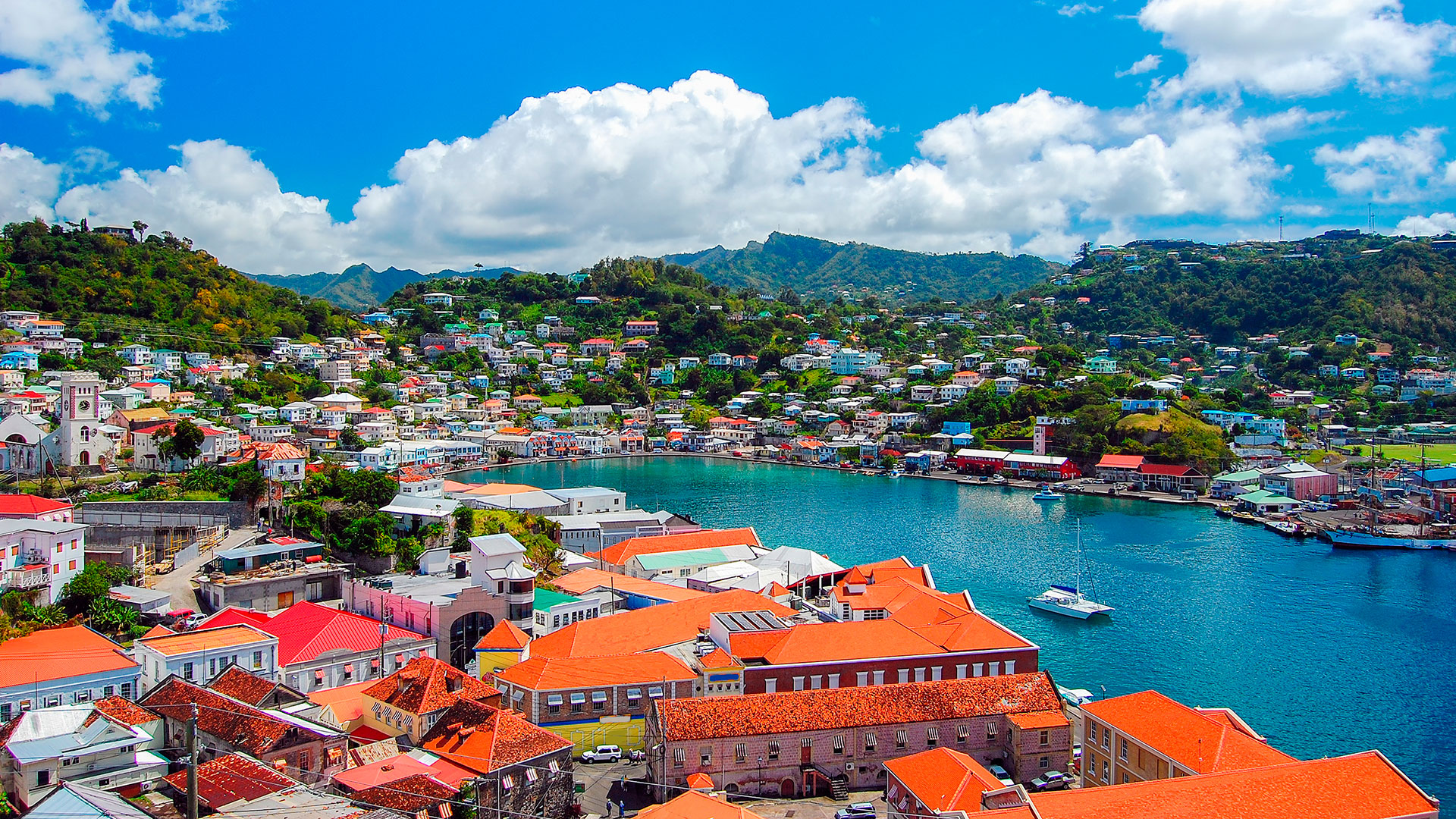
6. Grenada
Investors applying for citizenship must make an irrevocable contribution of at least USD 235,000 to the National Transformation Fund for a single applicant or a family of four, or purchase government-approved real estate valued at least USD 270,000. This program is attractive because it offers the opportunity to obtain a US E-2 investor visa in addition to providing access to 139 visa-free destinations. A Grenada passport provides visa-free access to China and Russia.
Applications are processed within 6 months. The investment holding period for real estate investments is at least five years. Compared to other Caribbean programs, the investment threshold is quite high considering the government fee for purchasing real estate is an additional USD 50,000.
 Grenada citizenship by investment
- Second passport for the investor’s family
- No language requirement
- Investment return after 5 years
7. St. Lucia
If you’re looking for flexibility in your investment allocation, the Saint Lucia CBI program offers the following:
- A non-refundable investment of at least USD 240,000 in the Saint Lucia National Fund.
- Purchase of real estate worth over USD 300,000 with a guaranteed return.
- Purchase of government bonds worth USD 300,000, plus a USD 50,000 administrative fee.
- Investment in the development of a local enterprise (e.g., a restaurant, port business, pharmaceutical company, or educational institution) starting from USD 3.5 million.
A Saint Lucia passport is processed within 3-6 months. Investments must be held for at least 5 years. The status allows for visa-free travel to 139 countries, including the Schengen Area and the UK. Saint Lucia is an offshore jurisdiction and, like other ones, has recently come under close scrutiny from the EU and OECD. As a result, it has introduced more transparency rules, such as registers of beneficial owners and exchange of tax information.
Furthermore, significant administrative fees are unavoidable. For example, when purchasing real estate, an investor must pay USD 30,000; with a spouse, USD 45,000; and USD 5,000 for each child under 18.
The selection of real estate is limited; investors can only purchase properties approved by the government. These typically include equity stakes in high-end hotels, shopping centers, branded boutiques, and spas, among others.
8. Antigua and Barbuda
This is a suitable option for family immigration because the Citizenship by Investment program allows up to 4 people to be included in the application without a significant increase in cost. Investments start with an irrevocable contribution of USD 230,000. Options include purchasing real estate worth over USD 300,000 or investing in business development starting at USD 400,000. A charitable contribution of USD 260,000 to the University of the West Indies Foundation allows you to include up to 6 people in your application. The investment passport process takes 3 to 6 months.
One special requirement is that, after receiving your passport, you must spend at least 5 days in the country during the first 5 years. Citizenship will give you visa-free access to 143 countries. Disadvantages of obtaining citizenship in Antigua and Barbuda include the low liquidity of real estate investments and potential visa risks due to the country’s easy citizenship requirements. Furthermore, Antigua and Barbuda’s economy is quite vulnerable due to high inflation and dependence on imports.
 Antigua and Barbuda citizenship by investment
- Second passport for the family
- No language requirement
- Investment refundable after 5 years
9. Nauru
This small Pacific island nation, with a population of around 11,140, recently introduced the Nauru Economic and Climate Resilience Citizenship Program (NCIP) in November 2024. The most modest of all CBI programs, it directly links your investments to projects that combat the effects of climate change.
To qualify, you must invest at least USD 105,000 in the state’s Treasury Fund. In return, you will receive a passport providing visa-free access to 90 countries, including Hong Kong, Singapore, and the United Kingdom. The application process takes approximately 3 months, and applicants do not need to be personally present on the island.
Disadvantages of Nauru include its size and remoteness from the mainland. The region faces environmental problems associated with extensive phosphate mining, which has recently declined significantly. Over 80% of the territory has become uninhabitable and unsuitable for agriculture. Until 2015, Nauru was an offshore jurisdiction but is now under strict FATF control, which closely monitors money laundering.
10. Jordan
The Jordanian program differs from the aforementioned programs in its relatively high investment threshold and citizenship application process. Investors can choose one of the following options:
- Establishing and registering a new commercial project worth approximately USD 990,000 in Amman or USD 705,000 outside the capital and creating 20 or 10 jobs, respectively.
- Purchasing shares of existing companies worth at least USD 1.4 million, provided that half of the investment is in fixed, long-term tangible assets and at least 20 jobs are created.
Jordan positions itself as an «island of stability» in the Middle East. However, a Jordanian passport does not provide travel privileges to the EU, US, or Canada, and it offers only 65 visa-free destinations, limiting its appeal as a travel passport. The program is designed to attract individuals who are willing to invest in and commit to the country.
 Jordan citizenship
 by investment
- Tax optimization
- No need to renounce current citizenship
- Regional stability

Which countries offer citizenship through real estate purchases?
Real estate acquisition is one of the most promising ways to obtain citizenship through investment. The reasons for the demand are quite obvious:
- Return on investment: Real estate is an asset that can be sold after a certain period of time (usually 3-7 years).
- Passive income: The residential or commercial property you purchased can be rented out.
- Capital preservation: Housing is recognized as a relatively stable asset that protects finances from inflation and exchange rate fluctuations.
- Practicality: You gain your own home in another country where you can vacation or live permanently.
To make it easier to compare, we have prepared a table listing the terms of programs in countries that grant citizenship through real estate purchases.
| Country | Requirements for minimum investment in real estate and conditions, $ | Processing times for obtaining citizenship | Key benefits |
|---|---|---|---|
| Turkey | Starting at 400 000: property cannot be sold for 3 years | 6–8 months | An E-2 visa to the US and visa-free entry to 124 countries, property rental option available |
| Grenada | Starting at 270 000: property cannot be sold for 5 years | 6 months | Visa-free entry to China and the UK, an E-2 visa to the US, property rental option available |
| Malta | Starting at 820 000, charitable contribution of 12 000 | 12–36 months | EU citizenship (freedom of movement, residence, and work throughout the European Union), visa-free entry to over 180 countries |
| Dominica | Starting at 200 000, government fee of 75 000 | 3–4 months | Visa-free entry to 124 countries, tax optimization |
| St. Kitts and Nevis | Starting at 325 000: cannot be sold for 7 years | 3–6 months | Offshore jurisdiction, tax optimization, visa-free travel to 145 countries |
| St. Lucia | Starting at 300 000: purchase of a government approved property | 3–6 months | Opportunity to diversify assets, reduce the tax burden |
| Egypt | Starting at 300 000: Retain for at least 5 years | 6–12 months | Expansion of influence in the region, prospects for a US E-2 visa |
| Antigua and Barbuda | Starting at 300 000, residency requirement: 5 days over 5 years | 3–6 months | Visa-free travel to 143 destinations, family immigration |

As you can see, each program has its own unique features. To determine the best option for your needs, we recommend consulting a Mirsatori immigration lawyer. Our specialists will help you choose the optimal program for obtaining status based on your investment preferences and priorities. We guarantee support throughout the entire process.
A complete list of countries offering investment programs: a comparison
If you’re looking for the fastest way to obtain second citizenship, Vanuatu is the best option. If return on investment is a key consideration, then Turkey or the Caribbean countries that offer citizenship through real estate investments are good options. If you’re interested in family immigration, consider the programs in Grenada and Antigua and Barbuda. Here’s a comparison table of Citizenship by Investment programs.
| Country | Minimum investment amount, $ | Processing times, months | Return on investment | Who can be included in the application |
|---|---|---|---|---|
| Vanuatu | Starting at 130 000 | 2 | No | Spouses, children under 25, and parents over 50 |
| Dominica | Starting at 200 000 | 3–4 | Yes (real estate) | Spouses, children under 30, and parents |
| St. Lucia | Starting at 240 000 | 3–6 | Yes (real estate, government bonds, business investments) | Spouses, children under 30, parents over 55, and siblings |
| Grenada | Starting at 235 000 | 6 | Yes (real estate) | Spouses, children under 30, parents, siblings |
| Turkey | Starting at 400 000 | 6–8 | Yes (all options) | Spouses, children under 18 |
| St. Kitts and Nevis | Starting at 250 000 | 3–6 | Yes (real estate, investments) | Spouses, children/dependents under 25, parents over 65 |
| Antigua and Barbuda | Starting at 230 000 | 3–6 | Yes (real estate, business investments) | Spouses, children under 30, parents, siblings |
| Malta | Starting at 820 000 | 4–6 | Partially (real estate) | Spouses, children under 29, parents |
| Nauru | Starting at 105 000 | 3–4 | No | Spouses, children under 30, parents over 55, siblings |
| Egypt | Starting at 250 000 | 6–12 | Yes (real estate, deposit, business investments) | Spouses, unmarried children under 21 |
Residence permits and permanent residence by investment as a path to citizenship
The Portugal Golden Visa. The country grants residence permits for investments in cultural heritage restoration of at least EUR 250,000 (e.g., in state funds or inter-municipal entities), or at least EUR 500,000 for scientific research and business, including creating 10 jobs. After 5 years, provided the investment is maintained, the investor and their family can apply for permanent residence and then citizenship. After receiving legal status, investors can sell their investment stake.
Golden Visa Program Greece provides a path to permanent residence through the purchase of real estate valued at least at EUR 250,000. You can also obtain a residence card by purchasing Greek company securities (from EUR 350,000) or by opening a deposit (from EUR 500,000). Residence status is renewed every 5 years, provided the investment is maintained. Permanent residence is not required. You can apply for a passport through naturalization after 7 years.
Golden Visa Cyprus program offers permanent residence through investment. The main requirement is purchasing real estate worth over EUR 300,000, shares in a local company, or investment fund units worth the same amount. You will also need to provide proof of a stable annual income of at least EUR 50,000. After 8 years of residence, citizenship through naturalization can be applied for. The processing time for permanent residence is approximately 2 months. To maintain your status, you must own the property and hold your investments until you receive a passport.
Malta Permanent Residence Programme allows applicants to obtain a permanent residence permit in exchange for a combination of a real estate investment (purchase of at least EUR 375,000 or annual rent of at least EUR 14,000) and non-refundable contributions (EUR 30,000 for purchase or EUR 60,000 for rent, plus a EUR 2,000 charitable donation). Additionally, applicants must provide proof of EUR 500,000 in collateral. Permanent residence is initially granted for 5 years and is renewable. The application process takes 4-8 months.
Under the Golden Investor Visa, residency in Hungary can be obtained by investing at least EUR 250,000 in a real estate fund or by making an irrevocable donation of at least EUR 1 million to a local university. With permanent residence, you can live in the country for 10 years, with an option to extend for the same period. The investment must be held for 5 years. After 8 years of naturalization, permanent residents can obtain citizenship.
Serbia issues a 6-month residence permit based on economic participation in an existing company. First, you must have EUR 50,000 in a Serbian bank account to demonstrate proof of funds. The permit is extended for 1 year upon investing at least EUR 5,000 in a completed business project. After 3 years with a temporary residence permit, you can apply for permanent residence. After another 5 years, you can apply for citizenship. The low investment requirements are a clear advantage of the Serbian program. Serbia is a candidate for EU membership, offering promising prospects for its citizens and residents.
Residency in Montenegro is available through the purchase of real estate. While the purchase price is not set by law, an average of EUR 1,800/m² is a good starting point. You must also demonstrate that you have sufficient funds to support yourself—at least EUR 400 per month. Another way to obtain a residence permit is to start your own company in Montenegro. The authorized capital of an LLC can be as low as EUR 1. Permanent residency is available after 5 years of residence and citizenship after 10 years. With competent legal support, the company and residency registration process usually takes 2 months.
The U.S. EB-5 program allows investors to obtain a green card (permanent residency status) for themselves and their families by investing at least USD 800,000 in a commercial enterprise located in a rural or high-unemployment area that creates 10 jobs for Americans. Investing in a more prestigious region requires an investment of at least USD 1,050,000. Applications are processed over a period ranging from 15 to 24 months. Initially, you will receive a temporary residence permit for 2 years. After 21–24 months of meeting the requirements, you can apply for a green card. After 5 years of permanent residence, you can apply for a passport.
 Residency by investment in Portugal
- Residency for family members
- Right to live in an EU country
- No language requirements
Mirsatori provides assistance and legal support in obtaining European residency. We will choose a customized program for you that combines a reasonable investment with a secure residence permit and the possibility of obtaining a passport. With the support of our specialists, obtaining a temporary residence permit and permanent residency becomes hassle-free.
7 benefits of citizenship by investment
- Travel freedom.
Having a second passport significantly expands your visa-free travel options. Citizenship in the EU, Caribbean countries, or other nations enables you to travel without visas to dozens of countries worldwide, including the Schengen Area, the UK, the US, and Canada. - Business opportunities.
Citizenship opens the door to new markets and enables you to conduct business without restrictions in stable, developed countries. These opportunities may include more favorable conditions for company registration, access to loans and financial instruments, and banking services. - Tax optimization.
Many CBI-offering jurisdictions have favorable tax systems. These systems guarantee exemption from income, capital, and inheritance taxes. In some cases, you can benefit from double taxation treaties. - Security and stability.
A second passport is reliable insurance against political or economic instability in your primary country of citizenship. It provides the opportunity to quickly relocate to a safe and stable state. - High-quality education and healthcare.
Having a second passport or residency in European countries gives you access to high-quality educational and medical institutions. This is especially important for families with children. - A secure future for generations to come.
The legal status obtained through investment is inheritable. It gives your children freedom of movement and educational opportunities and is a long-term investment in their well-being. - Fast process.
Citizenship-by-investment programs offer an expedited passport application process, often without the requirement of permanent residency in the country.
Want to apply for a residence permit or second citizenship?
Receive personalized advice and a free immigration solution from a MIRSATORI specialist.
Submit your request and receive expert advice

Disadvantages of citizenship by investment
Despite the advantages, obtaining a passport or residence permit through investment comes with several drawbacks and risks. Minimum investment thresholds start at hundreds of thousands of euros, and investments are often non-refundable. In addition to the investment amount, you must budget for administrative and government fees, as well as due diligence costs.
Investing in real estate or investment funds carries risks. There is no guarantee that the value of the purchased property will not decline, nor that the invested funds will generate the expected return. If the asset is sold at a loss, the investor may lose part of their capital.
Another factor to consider is the strict requirements. Submitting an application involves numerous bureaucratic formalities and is a multi-stage procedure. Everything is investigated, including the origin of the funds, the investor’s biography, and financial status. Attempting to navigate the legal intricacies independently and bypass the rules can result in the application being denied, leading to the loss of the invested funds and fees. Therefore, seeking the help of competent and experienced lawyers is essential.
Furthermore, program conditions are subject to change. Governments may tighten requirements, raise the investment threshold, or even close the program entirely. This means that the criteria you initially considered may change during or after the process. Some countries that currently offer citizenship by investment are regularly criticized by international organizations and other governments. Such criticism creates reputational risks for investors, whose second passport may be perceived as purchased.
Which country offers the greatest benefits for investors?
The best country for obtaining an investor passport depends on your priorities: speed of processing, tax optimization, freedom of travel, or geographic scope. If your primary goal is visa-free travel, consider passports that provide access to the most countries, such as those from Malta, Dominica, Grenada, and St. Kitts and Nevis.
If a favorable tax system is a key factor, consider Vanuatu as well as offshore jurisdictions such as Antigua and Barbuda, Saint Lucia, and Saint Kitts and Nevis. If time is a deciding factor, explore programs that stand out for their speed, such as Turkey’s, Nauru’s, Dominica’s, and Vanuatu’s CBI programs.
Investors looking to expand their businesses in favorable jurisdictions may be interested in the Maltese program, which offers EU citizenship by investment and access to the EU market. Grenada’s CBI program has the added benefit of qualifying you for a U.S. E-2 investor visa, allowing you to reside and conduct business in the U.S.
 Turkish citizenship by investment
- Citizenship status for family members
- No language test required
- Right to sell the property after 3 years
Conclusion: Is citizenship by investment ‘worth it’ in 2026?
Ideally, investment status makes sense when the financial investment and citizenship are both equally promising. It is also important to consider your own safety and that of your family.
However, in most cases, obtaining a temporary or permanent residence permit through the Golden Visa program in Europe is more reliable than obtaining citizenship. The guaranteed return on investment, the strength of the resulting passport, and the greater reach of visa-free travel make up for the length of the process.
If you need help choosing a jurisdiction, contact the specialists at Mirsatori. They will assess your unique situation and recommend the best option based on the size of your investment, how long it will take to obtain status, and your preferred business development destination.


News, tips, and exclusive insights — all on our channels. Pick the platform you prefer:


Fill out the form to schedule a meeting in the office or online

 +971 58 94 43 591