
 +34 68 911 88 69
 +382 69 704 986











How to understand which country is suitable for obtaining second citizenship?
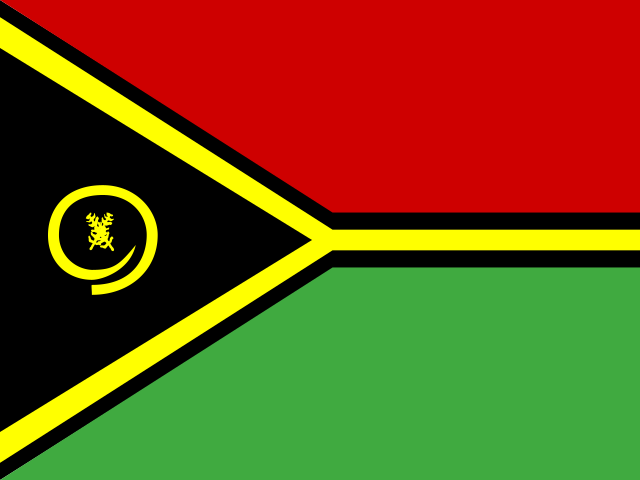
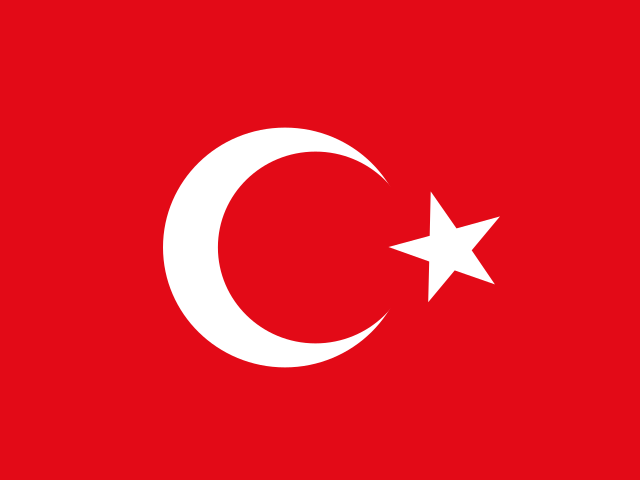
The choice depends on your goals. For travel freedom, countries such as Argentina, Brazil, and Chile may be suitable, as their passports allow access to 160+ countries worldwide. For business and tax optimization, Vanuatu, Turkey, and Grenada may be considered, while the United States and Canada are often chosen for comfortable long-term residence.
What is the difference between second and dual citizenship?
The key difference lies in the legal recognition of your status by the countries involved. Dual citizenship is possible only when there is an international agreement between states, under which both countries fully recognize your rights. Second or multiple citizenship does not require such an agreement, so each country treats you only as its own citizen.
Is it possible to obtain second citizenship without relocating?
Yes, this is possible under certain investment programs. For example, citizenship of Vanuatu or Turkey can be obtained without mandatory residence in the country. This allows you to obtain a second passport without changing your main place of residence.
Is it mandatory to pass language exams?
It depends on the requirements of the specific program. Citizenship by investment programs usually do not require language proficiency. However, in most naturalization programs, knowledge of the national language is a mandatory condition.
Is it possible to keep original citizenship after obtaining a second passport?
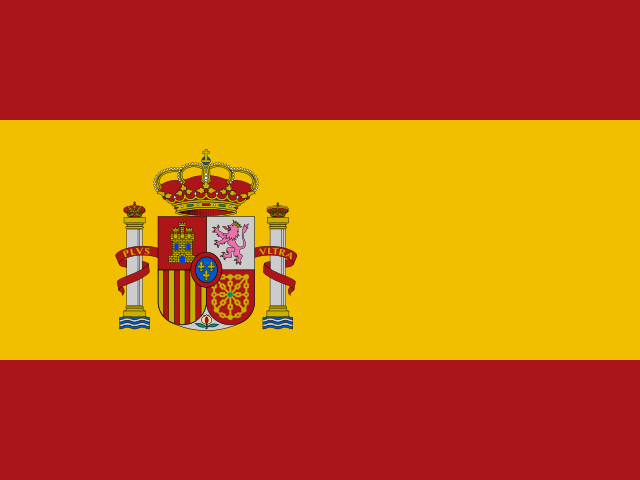
In most cases, yes. The laws of many countries, including the United States, Canada, and Chile, do not require applicants to renounce their first citizenship when obtaining a second one. However, it is important to check the legislation of the specific country, as some states, such as Spain, may require renunciation.
What is the minimum investment amount for obtaining citizenship by investment?
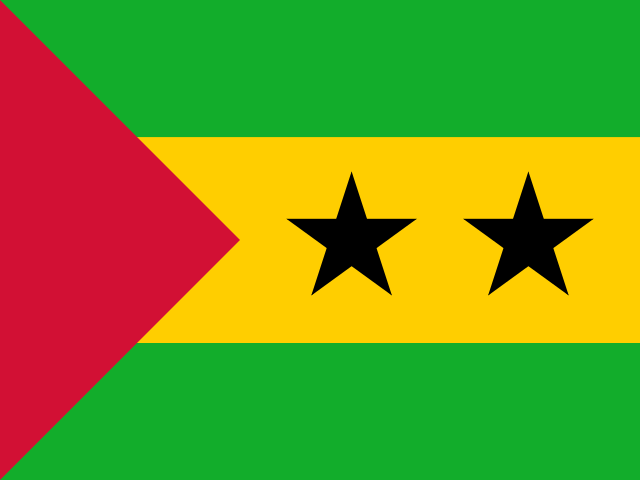
One of the more accessible investment programs for high-net-worth foreign nationals is offered by São Tomé and Príncipe. The minimum contribution to the National Transformation Fund is USD 90,000 for a single applicant and USD 95,000 for a family of four.
What are the most common reasons for citizenship refusal?
The most common reasons include providing false personal information, submitting forged documents, and concealing criminal records. Other frequent grounds include failure to meet investment requirements, such as incorrectly valued real estate, unreliable proof of source of funds, or suspicions of money laundering. Refusal may also result from reputational concerns regarding the applicant or a potential threat to the national security of the country.

 +971 58 94 43 591